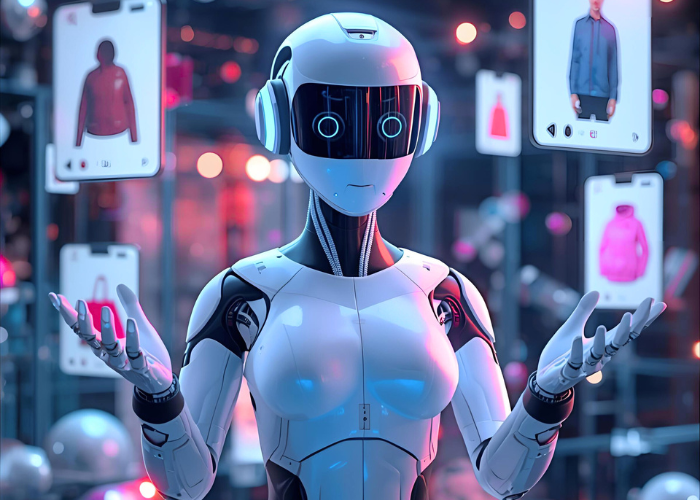
Best AI Virtual Try-On Apps for Fashion and Shopping (2025)
Remember the days when online shopping meant buying clothes based on hope and prayer? I’ve been there ordering a gorgeous dress online, waiting eagerly for delivery, only to find it looks nothing like I imagined. The color’s off, the fit is weird, and now I’m stuck with return shipping hassles.
That frustrating cycle ended for me when I discovered AI virtual try-on technology. After testing over 15 different apps and platforms in the past six months, I’m excited to share my real experiences with the best AI virtual try-on solutions that are revolutionizing how we shop for fashion in 2025.
What is AI Virtual Try-On Technology?
AI virtual try-on uses artificial intelligence, computer vision, and augmented reality to let you see how clothes, accessories, and makeup look on you without physically trying them on. Think of it as having a magic mirror that can instantly show you in any outfit from any store, anywhere in the world.
The technology works by:
- Analyzing your body measurements and proportions from photos or real-time video
- Understanding garment characteristics like fabric, drape, and fit
- Rendering realistic overlays that account for lighting, shadows, and movement
- Adapting clothing to your unique body shape and skin tone
When I first used virtual try-on, I was skeptical. Could AI really show me accurate results? After months of testing and comparing virtual try-ons with actual purchases, I can confidently say the technology has matured dramatically. The accuracy is now impressive enough to significantly reduce returns and increase shopping confidence.
My Journey with Virtual Try-On Apps
Let me take you back to March 2024. I was preparing for my cousin’s wedding and needed the perfect outfit. As someone who works from home in Gurugram, going to multiple stores wasn’t appealing. I’d heard about virtual try-on apps but assumed they were gimmicky.
I downloaded my first app almost by accident while browsing Instagram. Within minutes, I was “trying on” dozens of dresses without leaving my couch. The experience was surreal I could see how different colors complemented my skin tone, how various cuts suited my body type, and which styles matched my aesthetic.
That day, I spent three hours testing different apps and trying on hundreds of outfits. I was hooked up. Since then, I’ve made it my mission to test every virtual try-on platform I can find. Here’s what I’ve learned.
The Best AI Virtual Try-On Apps I’ve Actually Used
1. Google Shopping’s Virtual Try-On
My Rating: 9/10
Google’s entry into virtual try-on is probably the most accessible option available. I use this almost weekly now, and it’s integrated directly into Google Shopping searches.
What I Love:
- Works directly in search results no separate app needed
- Covers major brands like H&M, Anthropologie, LOFT, and Everlane
- Shows clothing on diverse body types (this is huge!)
- The AI accurately captures fabric drape and movement
Real Experience: I recently searched for “summer maxi dresses” and could instantly see how each dress looked on models with different body types like mine. I could switch between body types with a single tap, which helped me visualize the fit accurately. The dress I eventually ordered fit perfectly; no returns needed.
Limitations: Currently limited to tops and dresses. Not available for all brands yet.
Best For: Quick browsing while shopping online, comparing multiple items from different retailers.
2. Amazon’s Virtual Try-On for Shoes
My Rating: 8.5/10
As someone who’s bought and returned countless pairs of shoes online, Amazon’s shoe try-on feature has been a game-changer for me.
What I Love:
- Uses your phone’s camera to show shoes on your actual feet in real-time
- Works with thousands of shoe styles from brands like New Balance, Adidas, and Puma
- Lets you walk around and see shoes from different angles
- Surprisingly accurate color representation
Real Experience: I was shopping for running shoes in June 2024. Using the virtual try-on, I tested eight different pairs in my living room. I could see how the shoe proportions looked with my feet, check if the colors matched my workout clothes, and even show my friend a second opinion all before adding to cart. The shoes I chose arrived and looked exactly as they did in the AR view.
Limitations: Doesn’t help with fit or comfort only visual appearance.
Best For: Checking if shoe styles and colors suit you before purchasing.
3. Zeekit (Now Walmart’s Virtual Fitting Room)
My Rating: 9.5/10
Walmart acquired Zeekit, and honestly, it’s one of the most advanced virtual try-on experiences I’ve used. After Amazon bought Zeekit, Walmart developed their own sophisticated version.
What I Love:
- Upload a full-body photo once and try on thousands of items
- Extremely realistic body-specific rendering
- Works for tops, bottoms, dresses, and even some accessories
- Mix and match different pieces to create complete outfits
Limitations: Requires a clear full-body photo with good lighting. Sometimes the app can be slow during peak hours.
Best For: Creating complete outfits and serious online shopping sessions.
4. Snapchat’s AR Try-On Lenses
My Rating: 7.5/10
Snapchat’s AR lenses extend beyond silly filters; many fashion brands now use them for virtual try-on experiences.
What I Love:
- Fun and social you can share try-ons with friends
- Works with accessories like sunglasses, jewelry, and watches extremely well
Brands like Gucci, Dior, and Ray-Ban have dedicated lenses
- Real-time, responsive, and entertaining
Limitations: Better for accessories than clothing. The social aspect might not appeal to everyone.
Best For: Accessories, eyewear, and casual browsing with a fun element.
5. Lenskart’s 3D Virtual Try-On
My Rating: 8/10
As someone who wears glasses, I’ve struggled with online eyewear shopping. Lenskart’s 3D try-on solved this problem for me.
What I Love:
- Uses face mapping to show accurate fit and proportions
- Shows glasses from multiple angles (front, side, top)
- Helps with face shape recommendations
- Includes prescription lenses visualization
Real Experience: I needed new eye- glasses in October and dreaded the in-store experience. Using Lenskart’s app, I tried over 40 frames in 30 minutes. The 3D feature showed me exactly how each frame sat on my nose and ears. I could rotate my phone to see side profiles. The glasses I ordered fit perfectly without any adjustments needed.
Limitations: Specific eyewear. Requires precise facial measurements for best results.
Best For: Eyewear shopping, especially for those who wear prescription glasses.
6. Nike Fit
My Rating: 8/10
Nike’s approach focuses on solving the sizing problem, which is honestly just as important as seeing how something looks.
What I Love:
- Scans your feet using your phone camera
- Provides accurate size recommendations for Nike shoes
- Saves your measurements for future purchases
- Reduces sizing-related returns significantly
Real Experience: Athletic shoe sizing has always confused me, am I a size 7 or 8? It varies by brand and model. Nike Fit scanned my feet in September, and now I always know my exact Nike size. I’ve ordered four pairs since then, and every single one fits perfectly on the first try.
Limitations: Nike products only. Doesn’t show visual try-on.
Best For: Anyone who struggles with Nike shoe sizing.
How I Actually Use Virtual Try-On in My Shopping Routine
Let me walk you through my typical online shopping session now versus a year ago.
Before Virtual Try-On:
Browse for 30 minutes, add 10 items to cart.
Spend 20 minutes second-guessing everything.
Remove half the items, still unsure about the rest.
Order 5 items “just to see”.
Try everything when it arrives.
Return 3 items.
Total time wasted: 3+ hours, plus return hassles.
Now With Virtual Try-On:
Browse for 30 minutes, virtually try on 20+ items.
Immediately eliminate items that don’t suit me .
Create outfits with remaining items using virtual try-on.
Get feedback from family by showing them screenshots.
Order 2-3 items I’m confident about.
Return maybe 1 item.
Total time: 1-hour, minimal returns.
The difference is dramatic. I’m more confident, waste less time, and significantly reduce my environmental impact from return shipping.
The Technology Behind Virtual Try-On
Understanding how this technology works has made me appreciate it more and use it more effectively.
Computer Vision: The AI analyzes images to understand body shapes, garment characteristics, and how fabric behaves. Advanced algorithms can detect body landmarks, estimate 3D body shape from 2D images, and understand garment properties like texture and drape.
Generative AI: Modern virtual try-on uses generative AI models like those behind image creation tools. These models learned from millions of images of people wearing different clothes, understanding how garments fit various body types.
Augmented Reality: Real-time try-on experiences use AR to overlay virtual clothing on live video feeds, track body movement, and adjust the clothing display accordingly.
Machine Learning: The systems continuously improve by learning from user interactions, feedback, and actual purchase-to-return patterns.
Real Benefits I’ve Experienced
Reduced Decision Fatigue: Virtual try-on eliminates the mental exhaustion of imagining how things might look. I can see instantly, which preserves my decision-making energy for things that matter more.
Fewer Returns: My return rate dropped from about 40% to less than 10%. This saves me time, money, and hassle, while also being better for the environment.
Discovery of New Styles: I’ve discovered styles and colors I never would have tried otherwise. The low-risk nature of virtual try-on encourages experimentation. I bought a yellow dress this summer as a color I’d never considered because the virtual try-on showed me how surprisingly good it looked.
Money Saved: By ordering only what I’m confident will work, I spend less money on shipping, returns, and items that end up unworn in my closet.
Time Efficiency: Shopping sessions that used to take hours now take minutes. I can browse during lunch breaks or while waiting for appointments.
Limitations and Honest Drawbacks
Despite my enthusiasm, virtual try-on isn’t perfect. Here are the issues I’ve encountered:
Accuracy Varies: Some apps are significantly more accurate than others. Lower-quality virtual try-ons can mislead you, creating false confidence that leads to disappointing purchases.
Lighting Matters: Virtual try-ons struggle with color accuracy in different lighting conditions. That blue dress might look navy in the app but royal blue in reality.
Fabric Feel: You can’t assess fabric quality, weight, or texture through a screen. I’ve ordered items that looked perfect virtually but felt cheap or uncomfortable when they arrived.
Complex Garments: Items with intricate details, patterns, or unusual constructions don’t always render accurately. The technology works best for simple, structured pieces.
Body Movement: Static photos don’t show how clothes move and flow with your body. That flowy dress might restrict movement in ways the virtual try-on can’t reveal.
Fit vs. Appearance: Virtual try-on shows how something looks but can’t tell you if it will be comfortable, if the waistband digs in, or if the sleeves will be too tight.
Tips for Getting the Best Results
After months of testing, I’ve learned how to maximize virtual try-on accuracy:
For Photo Uploads:
Use a recent full-body photo in form-fitting clothes.
Stand against a plain background with good, even lighting.
Face the camera directly with arms slightly away from your body.
Avoid busy patterns or baggy clothing in your reference photo.
For Real-Time AR:
Use bright, natural lighting if possible.
Give yourself enough space to move around.
Hold your phone steady at chest height.
Try different angles to see how items look from all sides.
General Shopping Strategy:
Use virtual try-on as one tool, not your only decision factor.
Read reviews and check size charts even after virtual try-on.
Pay attention to fabric descriptions.
Look for detailed product photos showing texture and details.
Start with returnable items until you trust a platform’s accuracy.
The Future of Virtual Try-On
Based on industry developments I’ve been following, here’s what’s coming:
Haptic Feedback: Future devices might simulate fabric texture through haptic technology, letting you “feel” materials virtually.
AI Personal Stylists: Virtual try-on will integrate with AI that understands your style, suggesting complete outfits and new items based on your preferences and what you already own.
Virtual Wardrobes: Apps will catalog your existing clothes and show you how new purchases integrate with items you already have, reducing redundant purchases.
Size Prediction: Advanced body scanning will provide accurate size recommendations across all brands, eliminating sizing confusion.
Collaborative Shopping: Enhanced social features will let you shop virtually with friends in real-time, getting instant feedback on try-ons.
Sustainable Fashion: Virtual try-on will become crucial for reducing returns, one of fashion’s biggest environmental challenges.
How This Changed My Shopping Mindset
The most profound impact virtual try-on has had on me isn’t just practical it’s psychological. I no longer approach online shopping with anxiety and uncertainty. Instead, it’s become an empowering, even enjoyable experience.
I’ve become more adventurous with my style because the risk feels lower. I’ve discovered that certain colors I thought wouldn’t suit me actually look great. I’ve tried silhouettes outside my comfort zone. Virtual try-on removed the fear of wasting money on experiments.
I’m also more conscious of my consumption. When you can truly visualize whether something suits you, impulse purchases decrease. I buy less but love more of what I buy. My closet has become more curated and cohesive.
Is Virtual Try-On Worth It?
Absolutely yes with realistic expectations. Virtual try-on won’t eliminate all shopping challenges, but it solves many of them remarkably well.
For me, the technology has transformed online shopping from a gamble into an informed decision. I waste less time, spend less money, and end up wearing clothes. The occasional inaccuracy is a small price to pay for the overall improvement in my shopping experience.
If you haven’t tried virtual try-on yet, I encourage you to start with one of the platforms I’ve recommended. Begin with lower-risk items like accessories or tops. As you get comfortable with technology and understand each platform’s strengths, you’ll find yourself using it naturally.
Final Thoughts
We’re living in an exciting time for fashion technology. AI virtual try-on represents a fundamental shift in how we discover, evaluate, and purchase clothing. While the technology isn’t perfect, it’s already good enough to meaningfully improve the shopping experience.
After testing these platforms extensively, I genuinely believe virtual try-on is the future of fashion retail. The benefits of reduced returns, environmental impact, time savings, and increased confidence far outweigh the limitations.
The apps and platforms I’ve shared are the ones I use and trust. Each has specific strengths, and I often use several depending on what I’m shopping for. Google Shopping for quick browsing, Walmart’s virtual fitting room for serious outfit planning, and Snapchat for accessories and fun browsing sessions.
As these technologies continue improving, the gap between virtual and physical try-on will narrow further. For now, combining virtual try-on with smart shopping practices reading reviews, checking measurements, and understanding return policies creates the best possible online shopping experience.
Have you tried virtual try-on apps? I’d love to hear about your experiences. Technology is evolving rapidly, and real user feedback helps everyone make better shopping decisions.
For more insights on AI technology and how it’s transforming everyday life, visit NextMitra for the latest guides and reviews.
Quick Reference Guide
Best Overall: Google Shopping Virtual Try-On Best for Complete Outfits: Walmart Virtual Fitting Room Best for Shoes: Amazon Virtual Try-On Best for Accessories: Snapchat AR Lenses Best for Eyewear: Lenskart 3D Try-On Best for Sizing: Nike Fit
Pro Tip: Download multiple apps and use each for its strengths. I keep five different apps on my phone and choose based on what I’m shopping for.
External Resources for Further Reading:
Disclosure: This blog contains genuine experiences and recommendations. Some links may be affiliating links, but all opinions are my own based on actual testing and use.