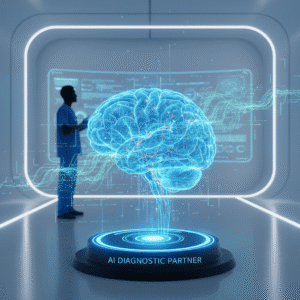
Artificial intelligence is no longer a futuristic concept—it’s reshaping every corner of our world. From the crops growing in rural farmlands to the complex algorithms managing global financial markets, specialized AI has become the invisible force driving innovation across industries. Unlike general-purpose AI systems, these tailored solutions address specific challenges with remarkable precision, fundamentally changing how we work, live, and interact with technology. Understanding machine learning basics is essential to grasp how these specialized systems function.
The Rise of Industry-Specific AI Solutions
The transformation from general AI to specialized AI represents a pivotal shift in technological development. While early AI systems attempted to be jacks-of-all-trades, modern applications focus on mastering specific domains. This specialization enables deeper problem-solving capabilities and more accurate results.
Industries worldwide are investing billions in custom AI solutions designed for their unique challenges. According to recent market analyses, the global AI market is projected to reach $1.8 trillion by 2030, with specialized applications driving most of this growth.
Agriculture: From Traditional Farming to Precision Agriculture
Smart Farming Revolution
Modern agriculture has embraced specialized AI to address food security challenges and optimize resource usage. Computer vision systems mounted on drones now scan thousands of acres, identifying diseased crops, pest infestations, and nutrient deficiencies before they become visible to the human eye.
Precision agriculture platforms analyze soil composition, weather patterns, and historical yield data to recommend optimal planting times and irrigation schedules. These intelligent systems help farmers increase crop yields by 20-30% while reducing water consumption and pesticide use.
Automated Harvesting and Sorting
Robotic harvesters equipped with AI can distinguish between ripe and unripe produce, selectively picking only what’s ready for market. This level of precision was impossible just a decade ago, but specialized AI has made it a reality on farms across North America and Europe.
Healthcare: AI as the Diagnostic Partner
Medical Imaging and Diagnosis
Healthcare has witnessed perhaps the most impactful implementation of specialized AI systems. Radiologists now work alongside AI platforms that can detect cancerous tumors, brain abnormalities, and cardiovascular issues with accuracy rates exceeding 95% in many cases.
These diagnostic AI systems analyze millions of medical images, learning patterns that might escape human observation. At Stanford University, researchers developed an AI system that identifies skin cancer as accurately as board-certified dermatologists, potentially saving countless lives through early detection.
Drug Discovery and Development
Pharmaceutical companies are leveraging specialized AI to accelerate drug discovery processes that traditionally took 10-15 years. Machine learning algorithms can now screen millions of molecular compounds in days, predicting which combinations might effectively treat specific diseases.
During the COVID-19 pandemic, AI systems helped identify potential vaccine candidates and therapeutic drugs at unprecedented speeds, demonstrating the life-saving potential of these technologies.
Finance: Intelligent Money Management
Algorithmic Trading and Risk Assessment
The financial sector has been an early adopter of specialized AI, with sophisticated algorithms now executing the majority of stock market trades. These systems analyze market trends, news sentiment, and economic indicators in milliseconds, making split-second trading decisions that human traders simply cannot match.
Banks employ AI-powered risk assessment models to evaluate loan applications, detecting fraud patterns and predicting default probabilities with remarkable accuracy. JP Morgan’s CoiN platform reviews commercial loan agreements in seconds—work that previously required 360,000 hours of human effort annually.
Personalized Financial Advisory
Robo-advisors powered by specialized AI now manage over $1 trillion in assets globally, providing personalized investment strategies based on individual risk tolerance, financial goals, and market conditions. These platforms democratize wealth management services previously available only to high-net-worth individuals.
Retail: The Personalized Shopping Experience
Recommendation Engines
Every time you shop online, specialized AI works behind the scenes to curate your experience. Recommendation algorithms analyze your browsing history, purchase patterns, and similarities with millions of other consumers to suggest products you’re likely to love.
Amazon attributes 35% of its revenue to its recommendation engine, while Netflix saves approximately $1 billion annually by keeping subscribers engaged through AI-driven content suggestions.
Inventory Management and Supply Chain Optimization
Retailers use predictive AI systems to forecast demand, optimize inventory levels, and streamline supply chains. Walmart’s AI platform analyzes weather patterns, local events, and historical sales data to ensure stores stock the right products at the right time, reducing waste and maximizing customer satisfaction.
Manufacturing: The Smart Factory Era
Predictive Maintenance
Manufacturing facilities deploy specialized AI sensors throughout production lines to monitor equipment health in real-time. These systems predict mechanical failures before they occur, scheduling maintenance during planned downtime rather than experiencing costly unexpected breakdowns.
General Electric reports saving hundreds of millions annually through AI-powered predictive maintenance across its industrial operations.
Quality Control Automation
Computer vision systems inspect products with superhuman consistency, detecting microscopic defects that human inspectors might miss during long shifts. Automotive manufacturers use AI to examine thousands of welds, paint applications, and component assemblies, ensuring every vehicle meets exacting quality standards.
Education: Personalized Learning Experiences
Adaptive Learning Platforms
Educational technology companies leverage specialized AI to create personalized learning paths for students. These platforms assess individual comprehension levels, learning styles, and knowledge gaps, then adapt content delivery accordingly.
Khan Academy’s AI tutor provides customized practice problems and explanations, helping millions of students worldwide learn at their own pace. Studies show adaptive learning systems can improve student outcomes by 20-30% compared to traditional one-size-fits-all approaches.
Automated Grading and Feedback
AI writing assistants now provide instant feedback on essays, helping students improve their composition skills through iterative practice. While these systems don’t replace human teachers, they augment educational capacity, allowing educators to focus on higher-order teaching activities.
It’s critical to realize that teachers are not being replaced by these AI systems. They’re giving teachers superpowers. AI allows teachers to focus on their core competencies, which include meaningful conversations with students, creative lesson design, mentoring, and relationship building, by taking over the time-consuming tasks of initial feedback and routine assignment grading. You can visit the AI tools directory to learn more about educational AI tools. The goal is to enhance human potential rather than replace the priceless human connection that enables excellent instruction.